South and Central Asia Subcommittee Chairman Bill Huizenga Delivers Opening Remarks at Hearing on U.S Foreign Policy in South Asia
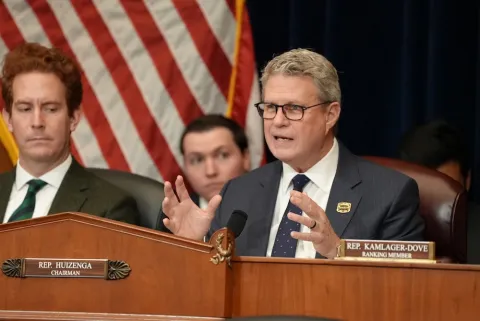
WASHINGTON, D.C. – Today, House Foreign Affairs South and Central Asia Subcommittee Chairman Bill Huizenga delivered opening remarks at a subcommittee hearing titled "South Asia: U.S. Foreign Policy in the Region".
-Remarks-
I want to thank Assistant Secretary Kapur for his presence here today. We are gathered to discuss one of the most important regions in the world, South and Central Asia. Our strategy there is key to the United States national security and economic strength and our global presence. South and Central Asia is home to nearly 2 billion people, dynamic economies and strategic waterways that shape the balance of power in the Indo-Pacific. Throughout the region, the President has successfully negotiated deals that open markets and advance U.S. Economic interests. Now we are going to engage and how we engage will define America's role in Asia for decades to come. China has come to the same conclusion, no surprise. Through its belt and road initiative, China engages in predatory lending to further its security interests and force smaller nations into debt traps. Furthermore, China has hardened its border with India, Nepal, and Bhutan, building infrastructure to support its military aspirations. Despite its distance from our shores, maintaining a free and open Indian Ocean is a priority for our national and our economic security. The Indian Ocean is one of the busiest maritime corridors on the Earth, carrying the lifeblood of global commerce and energy, including more than 80% of global seaborne oil trade.
Safeguarding these sea lanes through enhanced naval cooperation with partners and allies will only serve to counter China's growing influence and limit its malign behavior in the region. Alongside President Trump, I too see the importance of our naval base on Diego Garcia in the middle of the Indian ocean. I echo this sentiment that preserving America's military fortitude in the region will deter Chinese coercion, prevent piracy, and ensure the free flow of American and world trade. Directly north of Diego Garcia, India, the largest democracy in the world and one of the fastest growing economies, remains a vital strategic partner. Just last week, President Trump brokered a historic trade deal with India, completely revamping US engagement with the country. The US-India trade deal sets India's tariff rate at 18%, one of the lowest regionally. Moreover, Delhi has agreed to buy more American energy. This deal will strengthen US-India relations, support American workers through manufacturing and joint technology ventures, and boost our exports.
Strengthening ties with New Delhi through defense cooperation, trade and technology partnerships advances our shared interests. I look forward to increasing cooperation, co-production and investment, especially under the new framework negotiated by the President. Bordering India, Nepal and Bangladesh are undergoing political transformations. Bangladesh will hold free elections tomorrow following its 2024 July revolution, which ousted an authoritarian government in September of 2025, Nepalese youth overthrew the government and Nepal will hold democratic elections next month. Both of these instances offer new chapters for engagement in South Asia, defining US relations with these new governments. South and Central Asia is a dynamic region, young growing populations are more often drawn to western cultures and values than to China's authoritarian alternative.
Strategic US led diplomacy will make a difference in building alliances and achieving our mutual beneficial goals throughout the region. Our strategy in South Asia must be comprehensive, anchored in strong partnerships, economic engagement, and a commitment to democratic values. Our engagement in the region must advance American interests, but also continue to contribute to a more secure, prosperous and free Indian Ocean. I look forward to hearing from Assistant Secretary Kapur regarding the administration's South and Central Asia strategy.
###