Europe Subcommittee Chairman Self Delivers Opening Remarks at Hearing on Emerging Threats to U.S. Space Security
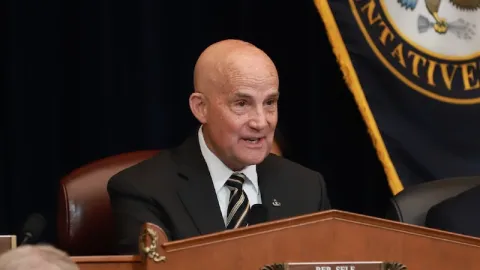
WASHINGTON, D.C. – Today, House Foreign Affairs Europe Subcommittee Chairman Keith Self delivered opening remarks at a subcommittee hearing titled “Orbits of Influence: Emerging Threats to U.S. Space Security and Foreign Policy Implications”.
-Remarks-
Just a few weeks ago, the world watched as our astronauts completed a historic mission circling the moon, the first astronauts to return in over half a century. It was once again a powerful reminder that American leadership in space is unmatched and must remain that way.
However, the realities in outer space are much different today than they were 50 years ago. Space is now a congested and contested domain; one the U.S. Space Force characterizes as a “warfighting domain.”
Our hearing today on space security is important as our subcommittee grapples with the question of how to compete effectively and maintain U.S. leadership in a competitive global environment, where technology and the nature of conflict are changing.
Space is an environment where actions can be difficult to attribute, formal norms are limited, and intentions are frequently unclear.
China, for example, has engaged in aggressive maneuvers in space from pushing defunct satellites out of orbit to close proximity operations that the U.S. Space Force have characterized as “dogfighting” in orbit.
It is difficult to distinguish between benign and malign actions in space because many space systems are dual use. Put simply, a satellite’s grappling arm that may be used to repair another satellite in peacetime, could in wartime, be employed to disable a U.S. reconnaissance or military communications satellite.
The competition is not only playing out in orbit, but also here on earth. China is rapidly expanding space partnerships in developing countries, investing in ground infrastructure to improve tracking, monitoring, and launch capabilities.
And while China has now surpassed Russia as America’s greatest challenger in space, Russia still maintains a formidable space program. For years, the Russians have been developing a nuclear-capable anti-satellite weapon, that, if employed, would have devastating impacts to satellite operations in low Earth orbit.
At the same time, concerns in outer space extend well beyond counterspace capabilities. The competition for space superiority is also front and center in the civil, commercial, and diplomatic realms.
Programs like NASA’s Artemis Accords, in coordination with the U.S. State Department, show how American leadership in space strengthens our alliances and advances U.S. interests. Sixty three countries have signed on, establishing a shared framework to guide the civil exploration and use of outer space.
But China is working aggressively to challenge that leadership from lunar base ambitions to expanding satellite constellations through the International Telecommunications Union (ITU).
That is why it is encouraging to see the State Department prioritizing these emerging challenges. Secretary Rubio created a new Bureau of Emerging Threats, which among other priorities, will focus on the very space security issues we will discuss today.
It is important that we authorize this bureau and advance additional legislative actions, which we will discuss in more detail today, to ensure this Committee supports efforts to strengthen the security and stability of the space domain. As the Chairman of the Subcommittee with oversight responsibility of the Bureau of Emerging Threats, as well as a member of the House Committee on Science, Space, and Technology, I look forward to working with my colleagues to advance these priorities.
I would like to thank all the witnesses for your time today, and I look forward to hearing your testimonies on this important topic.
###