Europe Subcommittee Chairman Self Delivers Opening Remarks at Full Committee Hearing on Arms Control and International Security for the Modern Age
March 25, 2026
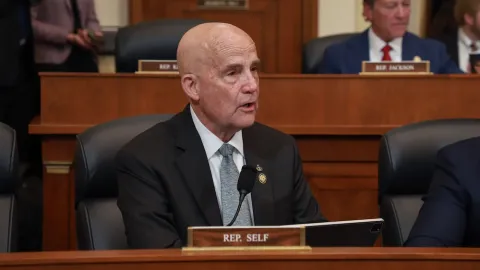
WASHINGTON, D.C. – Today, House Foreign Affairs Europe Subcommittee Chairman Keith Self delivered opening remarks at a full committee hearing titled "Securing the Future: Arms Control and International Security for the Modern Age".
Image
-Remarks-
Today, this hearing focuses on international security and arms control matters that are crucial to U.S. foreign policy. We will hear how the State Department, under the Office of Under Secretary of Arms Control and International Security, also known as the T family, manages a range of key bureaus and offices to confront evolving security threats, strengthen deterrence, and advance U.S. foreign policy. Secretary DiNanno, Secretary Rubio's recent reorganization of the department has brought new alignment across the T family and represents a positive step toward improving efficiency at Foggy Bottom.
As these changes continue to take shape, we would welcome a renewed focus on ensuring consistent communication with Congress. Members of this committee are awaiting information for the Bureau of Political-Military Affairs on security cooperation that was due three weeks ago.
In addition, it would be helpful to ensure that the Bureau of International Narcotics and Law Enforcement Affairs provide this committee with the requested briefing on narcotics trafficking in Asia by the end of the month. We would appreciate your assistance in keeping these efforts moving forward and keeping communications with Congress on track.
Returning to the broader realignment across the T family, the department merged the Bureau of International Security and Nonproliferation with the Bureau of Arms Control, Deterrence and Stability to form the new Bureau of Arms Control and Nonproliferation, or ACN. This change brought together the team that negotiates arms control treaties with the team that works on treaty verification mechanisms, where they were previously housed in separate bureaus. This is just one example of the commonsense benefits of the reorganization.
In addition, several bureaus, including the Bureau of Political-Military Affairs, Bureau of Counterterrorism, Bureau of International Narcotics and Law Enforcement Affairs, and the newly established Bureau of Emerging Threats now report directly to you the Under Secretary of Arms Control and International Security. These changes streamline decision making and enable faster, more efficient responses to both ongoing and emerging threats. The new structure positions the Under Secretary to tackle these challenges, including the question of strategic stability and the next era of arms control.
As Under Secretary DiNanno emphasized in February before the Conference on Disarmament, arms control must evolve to be verifiable, enforceable, and responsive to technological change and strategic competition. The need is urgent. Russia continues to deploy advanced nuclear systems, including the RS-28 Sarmat ICBM, the Poseidon nuclear torpedo, the SSC-X-9 Skyfall cruise missile and the Avangard hypersonic glide vehicle.
In addition to the challenges the US is facing from Russia in this field, China is rapidly expanding its own nuclear arsenal. The Pentagon projects it will reach 1000 warheads by the end of the decade, up from just 600 in 2024.
For the first time in the nuclear age, the US faces two nuclear peer adversaries, Russia and China, while also confronting rising threats from smaller, unpredictable nuclear powers, including North Korea, which continues developing its own strategic and tactical nuclear capabilities. During Under Secretary DiNanno’s address to the Conference on Disarmament, he provided details about China's history of nuclear weapons testing.
In 2020, the US detected a nuclear explosion near the Lop Nur underground test site at a magnitude of 2.7 seismic event identified through seismic data from Primary Seismic Station 23 of the International Monitoring System network at Kazakhstan. This information shines light on China's nuclear activities and helps spur a critical international discussion on responsible nuclear testing. Modern arms control must account for such behavior to maintain peace and stability.
At the same time, we are entering an era of fifth generation gray zone warfare. Adversaries including Moscow and Beijing exploit hybrid tactics to undermine the U.S. and its allies. Across Europe, we see threats once unimaginable: airspace violation, weaponized mass migration, infrastructure sabotage, cyber intrusions, all blurring the lines between war and peace. This type of warfare blends military and nonmilitary means overt and covert to destabilize societies and threaten U.S. interests across the globe. These tactics intersect directly with the T family's duties and responsibilities, complicating the strategic environment that we must navigate.
To address these challenges, I introduced the Strategic Hybrid Activities Defense and Operations of the West Act, or the SHADOW Act, which establishes the State Department's first ever coordinator for hybrid warfare accountability to align our diplomatic, interagency and allied efforts, enabling better information sharing, clearer attribution, coordinated responses, and stronger resilience across NATO. I also introduced the Biodefense Diplomacy Enhancement Act, which strengthens U.S. diplomatic engagement with allies and partners in the areas of biodefense, biosecurity and biotechnology. I look forward to the committee markup of these bills tomorrow.
There is no doubt that the threats we face are interconnected and fast moving, spanning nuclear deterrence, terrorism, transnational crime, and emerging technologies. This hearing provides an opportunity to examine how the T family organizes and prioritizes its efforts across the department and interagency. Specifically, we will discuss the Bureau of Arms Control and Nonproliferation. It negotiates and enforces arms control agreements. The Bureau of Political-Military Affairs manages a broad range of strategic cooperation and assistance programs with our partners and allies. The Bureau of Counterterrorism serves as a central hub for U.S. diplomatic efforts to combat terrorism abroad. The Bureau of International Narcotics and Law Enforcement Affairs leads efforts to counter transnational crime, combat drug trafficking, and coordinate with international law enforcement. Finally, the Bureau of Emerging Threats focuses on some of the most cutting edge and forward-looking security challenges facing the United States, including lethal autonomous weapons and risk in undersea and outer space domains.
Let me be crystal clear. Our adversaries are developing and deploying advanced technology in disruptive ways that threaten our core national interests. It is therefore essential to sustain a Bureau of Emerging Threats that can anticipate and address these risks. In conclusion, this hearing is an opportunity to examine how the T family aligns resources to address both enduring and emerging threats, advancing U.S. security and diplomacy. I thank you, Under Secretary, for joining us, and I look forward to the substantive discussion that we will have with you today – how you strengthen your department's effectiveness and how Congress can support it in delivering results for the American people.
As these changes continue to take shape, we would welcome a renewed focus on ensuring consistent communication with Congress. Members of this committee are awaiting information for the Bureau of Political-Military Affairs on security cooperation that was due three weeks ago.
In addition, it would be helpful to ensure that the Bureau of International Narcotics and Law Enforcement Affairs provide this committee with the requested briefing on narcotics trafficking in Asia by the end of the month. We would appreciate your assistance in keeping these efforts moving forward and keeping communications with Congress on track.
Returning to the broader realignment across the T family, the department merged the Bureau of International Security and Nonproliferation with the Bureau of Arms Control, Deterrence and Stability to form the new Bureau of Arms Control and Nonproliferation, or ACN. This change brought together the team that negotiates arms control treaties with the team that works on treaty verification mechanisms, where they were previously housed in separate bureaus. This is just one example of the commonsense benefits of the reorganization.
In addition, several bureaus, including the Bureau of Political-Military Affairs, Bureau of Counterterrorism, Bureau of International Narcotics and Law Enforcement Affairs, and the newly established Bureau of Emerging Threats now report directly to you the Under Secretary of Arms Control and International Security. These changes streamline decision making and enable faster, more efficient responses to both ongoing and emerging threats. The new structure positions the Under Secretary to tackle these challenges, including the question of strategic stability and the next era of arms control.
As Under Secretary DiNanno emphasized in February before the Conference on Disarmament, arms control must evolve to be verifiable, enforceable, and responsive to technological change and strategic competition. The need is urgent. Russia continues to deploy advanced nuclear systems, including the RS-28 Sarmat ICBM, the Poseidon nuclear torpedo, the SSC-X-9 Skyfall cruise missile and the Avangard hypersonic glide vehicle.
In addition to the challenges the US is facing from Russia in this field, China is rapidly expanding its own nuclear arsenal. The Pentagon projects it will reach 1000 warheads by the end of the decade, up from just 600 in 2024.
For the first time in the nuclear age, the US faces two nuclear peer adversaries, Russia and China, while also confronting rising threats from smaller, unpredictable nuclear powers, including North Korea, which continues developing its own strategic and tactical nuclear capabilities. During Under Secretary DiNanno’s address to the Conference on Disarmament, he provided details about China's history of nuclear weapons testing.
In 2020, the US detected a nuclear explosion near the Lop Nur underground test site at a magnitude of 2.7 seismic event identified through seismic data from Primary Seismic Station 23 of the International Monitoring System network at Kazakhstan. This information shines light on China's nuclear activities and helps spur a critical international discussion on responsible nuclear testing. Modern arms control must account for such behavior to maintain peace and stability.
At the same time, we are entering an era of fifth generation gray zone warfare. Adversaries including Moscow and Beijing exploit hybrid tactics to undermine the U.S. and its allies. Across Europe, we see threats once unimaginable: airspace violation, weaponized mass migration, infrastructure sabotage, cyber intrusions, all blurring the lines between war and peace. This type of warfare blends military and nonmilitary means overt and covert to destabilize societies and threaten U.S. interests across the globe. These tactics intersect directly with the T family's duties and responsibilities, complicating the strategic environment that we must navigate.
To address these challenges, I introduced the Strategic Hybrid Activities Defense and Operations of the West Act, or the SHADOW Act, which establishes the State Department's first ever coordinator for hybrid warfare accountability to align our diplomatic, interagency and allied efforts, enabling better information sharing, clearer attribution, coordinated responses, and stronger resilience across NATO. I also introduced the Biodefense Diplomacy Enhancement Act, which strengthens U.S. diplomatic engagement with allies and partners in the areas of biodefense, biosecurity and biotechnology. I look forward to the committee markup of these bills tomorrow.
There is no doubt that the threats we face are interconnected and fast moving, spanning nuclear deterrence, terrorism, transnational crime, and emerging technologies. This hearing provides an opportunity to examine how the T family organizes and prioritizes its efforts across the department and interagency. Specifically, we will discuss the Bureau of Arms Control and Nonproliferation. It negotiates and enforces arms control agreements. The Bureau of Political-Military Affairs manages a broad range of strategic cooperation and assistance programs with our partners and allies. The Bureau of Counterterrorism serves as a central hub for U.S. diplomatic efforts to combat terrorism abroad. The Bureau of International Narcotics and Law Enforcement Affairs leads efforts to counter transnational crime, combat drug trafficking, and coordinate with international law enforcement. Finally, the Bureau of Emerging Threats focuses on some of the most cutting edge and forward-looking security challenges facing the United States, including lethal autonomous weapons and risk in undersea and outer space domains.
Let me be crystal clear. Our adversaries are developing and deploying advanced technology in disruptive ways that threaten our core national interests. It is therefore essential to sustain a Bureau of Emerging Threats that can anticipate and address these risks. In conclusion, this hearing is an opportunity to examine how the T family aligns resources to address both enduring and emerging threats, advancing U.S. security and diplomacy. I thank you, Under Secretary, for joining us, and I look forward to the substantive discussion that we will have with you today – how you strengthen your department's effectiveness and how Congress can support it in delivering results for the American people.
###