Europe Subcommittee Chairman Keith Self Delivers Opening Remarks at Hearing on a Path Toward Stability in the Western Balkans
WASHINGTON, D.C. – Today, House Foreign Affairs Europe Subcommittee Chairman Keith Self delivered opening remarks at a subcommittee hearing titled "Flashpoint: A Path Toward Stability in the Western Balkans".
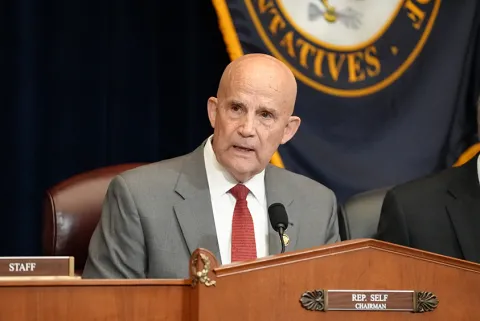
The goal of this hearing is to promote balance in the Balkans. It is my hope that perhaps members on both sides of the aisle can agree on the common goal of serving U.S. interests as we seek to promote balance in this region, prosperity for its citizens, and deterrence of future conflicts. Excluding Russian aggression against Ukraine, the Western Balkans remains the most unstable region in Europe. Although open conflict has subsided since the breakup of Yugoslavia in the 1990s, centuries of ethnic division, shifting borders and political mistrust continue to haunt this neighborhood as various political crises threaten the post-Yugoslav order. Case in point, Serbia's unresolved relationship with Kosovo is one of the core drivers of regional instability that has created a strategic fault line that enables Russia's ability to undermine the EU and NATO's ability to empower the Balkan countries.
The 2023 OHRID agreement between Serbia and Kosovo, intended to deescalate immediate tensions and revive past agreements, has stagnated. Kosovo's election crisis has exacerbated this situation as a result of the republic's failure to form a government following its February 25th election, causing Kosovo's current preparation for another snap election on December 28th. Following the election, if Kosovo forms a government, it is my sincere hope that Serbia will finally recognize Kosovo's sovereignty. The rapidly deteriorating situation in Bosnia has led to an exponential increase of the use exponential increase of the use of legally questionable bond powers by the high representative. This unchecked authority, which enables the high representative to strike or impose legislation and remove officials from office, was dormant from 2014 to 2021, but in recent years their use has surged significantly. The United States has long supported efforts to build an independent, incredible judiciary in Albania. After ten years of implementation, however, it is appropriate to reexamine whether justice reform is functioning as intended and delivering impartial justice for the Albanian people. It should be concerning to all that the national case backlog has expanded from roughly 16,000 cases at the start of the reform to an estimated 200,000 today, leaving citizens waiting 8 to 15 years to receive a final ruling. Such delays undermine the rule of law, public trust and due process.
Daily life in the Western Balkans is marked by both a declining and aging population. Like many other parts of Europe, there is an exodus of those who are skilled and educated. Illegal immigration is rampant, unemployment and poverty rates are rising dramatically. These factors are negatively impacting the rule of law, promoting organized crime and money laundering and corruption. Perhaps the most persistent and pressing challenge continues to be the region's deeply rooted ethno-religious divisions in Bosnia. Some observers believe that the Dayton peace accords political system is exacerbating the ethnic divides, as opposed to their intended role of bridging the gap. Neighboring Kosovo, on the other hand, has in place specific protections for minorities that exceed those of its EU counterparts. Kosovo fears Serbian leverage in the association of Serb majority municipalities, the so-called ASM, and has not fully implemented ASM policies. Just across the border in southern Serbia, widespread reports of passivation of the Preservo valley are well documented by multiple sources, claiming that there is a concerted effort underway to rid the valley of ethnic Albanians. Indeed, America's adversaries are actively exploiting vulnerabilities like passivation while engaging in hybrid warfare, that is, adding to the instability of the region. The Chinese Communist Party has exerted its influence by conducting military drills and sending weapons to Serbia.
In addition, the CCP continues to strike economic deals across the region as part of a specific effort to cultivate its malign apparatus and exploit corruption in the Western Balkans. Iranian state cyber actors known as homeland justice have repeatedly launched cyber attacks on Albania for hosting dissidents of the regime. In fact, an attack last summer temporarily paralyzed the municipal services of Albania's capital city, Tirana. I also want to make a brief moment to congratulate the people of Albania on their recent Independence Day and reaffirm our strong partnership, anchored in shared values and our NATO alliance. Russia is also influencing growing tensions through Bosnia's Republika Srpska and Serbia. Milorad Dodik, who is barred from running for public office of RS, continues to leverage his political capital to control the Bosnian Serb entity and to play to Russia's heavy handed tactics, like threatening secession from Bosnia. Whereas Serbia, despite indirectly supplying weapons to Ukraine, also has defense ties with Russia and promotes Russian and Chinese propaganda, reportedly hosted Russian operatives training paramilitary groups in eastern Serbia to disrupt Moldova's 2024 and 2025 elections. Though partially explained by perceived cultural ties, Serbia's alignment with Russia cannot be separated from its energy dependance, with a majority of its gas supplied by Russia.
Any effort to curb Moscow's political influence must address Serbia's reliance on Nist and Gazprom. In the event of renewed conflict, NATO allies Albania, Montenegro, North Macedonia would be directly in the crosshairs, potentially triggering Article V authority. Through synchronized defense efforts, NATO countries in the Balkans should work together to build military and political deterrents. Kosovo would be particularly exposed without NATO membership, which remains blocked by Spain, Greece, Romania and Slovakia's refusal to recognize its Independence. Despite these challenges, opportunities to improve stability, peace and prosperity in the Eastern and Western Balkans remain. Eight of my 25 years in the United States army were spent serving in Europe. Five of those years at the strategic headquarters of NATO and the US-European command. During that time, I was intimately involved in NATO's operation allied force in 1999. I have firsthand experience helping ensure peace and stability in this important region. Yet all those years later, the Western Balkans remain a tinderbox.
Without a change in strategy, US leadership must have a significant impact on maintaining stability and preventing renewed conflict that would adversely impact the balance of power in Europe. I applaud the Trump administration for reengaging this often overlooked region. This Subcommittee now has the opportunity to provide meaningful oversight and consider how Congress can help promote lasting stability, peace, and prosperity in the Western Balkans.