East Asia and the Pacific Subcommittee Chairwoman Kim Delivers Opening Remarks at Subcommittee Hearing on Aligning Commercial Diplomacy
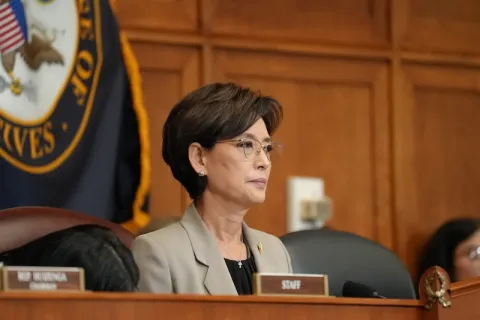
WASHINGTON, D.C. – Today, House Foreign Affairs East Asia and the Pacific Subcommittee Chairwoman Young Kim delivered opening remarks at a subcommittee hearing titled “More Bang for the Buck: Aligning Commercial Diplomacy Between State and Commerce.”
-Remarks-
Good afternoon, and welcome to today's joint hearing – More Bang For the Buck: Aligning Commercial Diplomacy Between State and Commerce. Over the past year, our committee has examined commercial diplomacy and how it supports American businesses overseas, a capability that directly shapes our global competitiveness.
While the United States possesses strong tools, they are spread across agencies and implemented unevenly at our posts. The Foreign Commercial Service delivers valuable private sector expertise where present. However, with only about 200 personnel and coverage in roughly one third of U.S. posts, the burden of commercial diplomacy often falls on State Department economic officers who lack dedicated training. This produces gaps, unclear responsibilities, and missed opportunities for U.S. companies.
Congress must evaluate whether the current decades-old structure remains optimal. This hearing focuses on improving coordination, workforce expertise, and incentives so the right people with the right skills deliver results at post.
In May, I introduced H.R. 9062, the Boost American Business Act that provides targeted commercial diplomacy training to State Department personnel who are already performing this work where FCS is absent. It established a Foreign Service specialization to build portable expertise without duplicating FCS efforts or displacing Commerce personnel.
The aim is simple, equip those doing the job today to do it better while respecting FCS contributions.
State is already moving in this direction. Department leadership has elevated commercial diplomacy as a priority. Under Secretary Jacob Helberg has stressed its centrality to the U.S. economic interests and Under Secretary Jason Evans outlined plans to retrain economic officers and Assistant Secretary launched the commercial diplomacy enterprise to better support American businesses.
Since the Department is advancing these efforts administratively, Congress should consider providing the necessary authorities and training to institutionalize and strengthen them.
So I want to be very clear. This is not a criticism of the dedicated FCS officers whose accomplishments for American businesses are commendable. The challenges stem from systemic resourcing decisions that have created capacity gaps. We should celebrate what works while addressing shortcomings through better training, structural improvements, and alignment of authorities and resources.
If we are serious about helping American businesses succeed amid strategic competition, we need a coordinated, expert-driven commercial diplomacy model. So I want to thank you, Assistant Secretary Orr and Assistant Secretary Fogel, for joining us today, and I look forward to a productive discussion on achieving that goal.
###